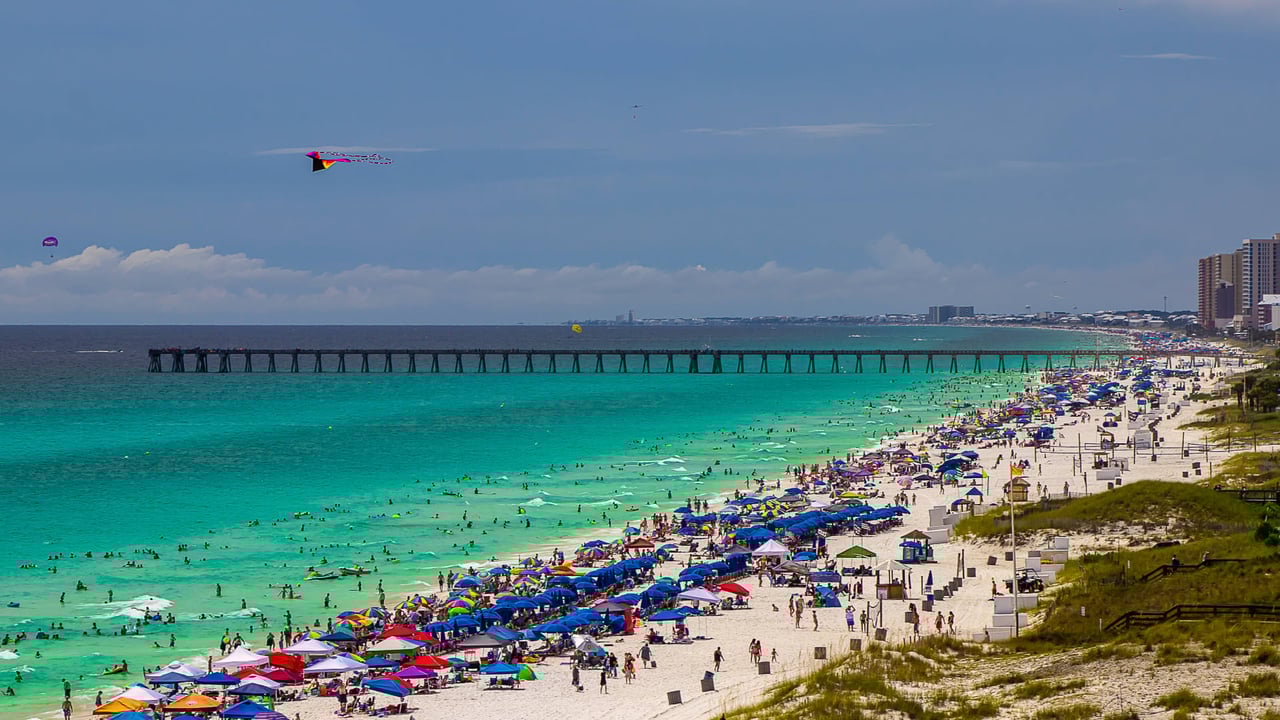
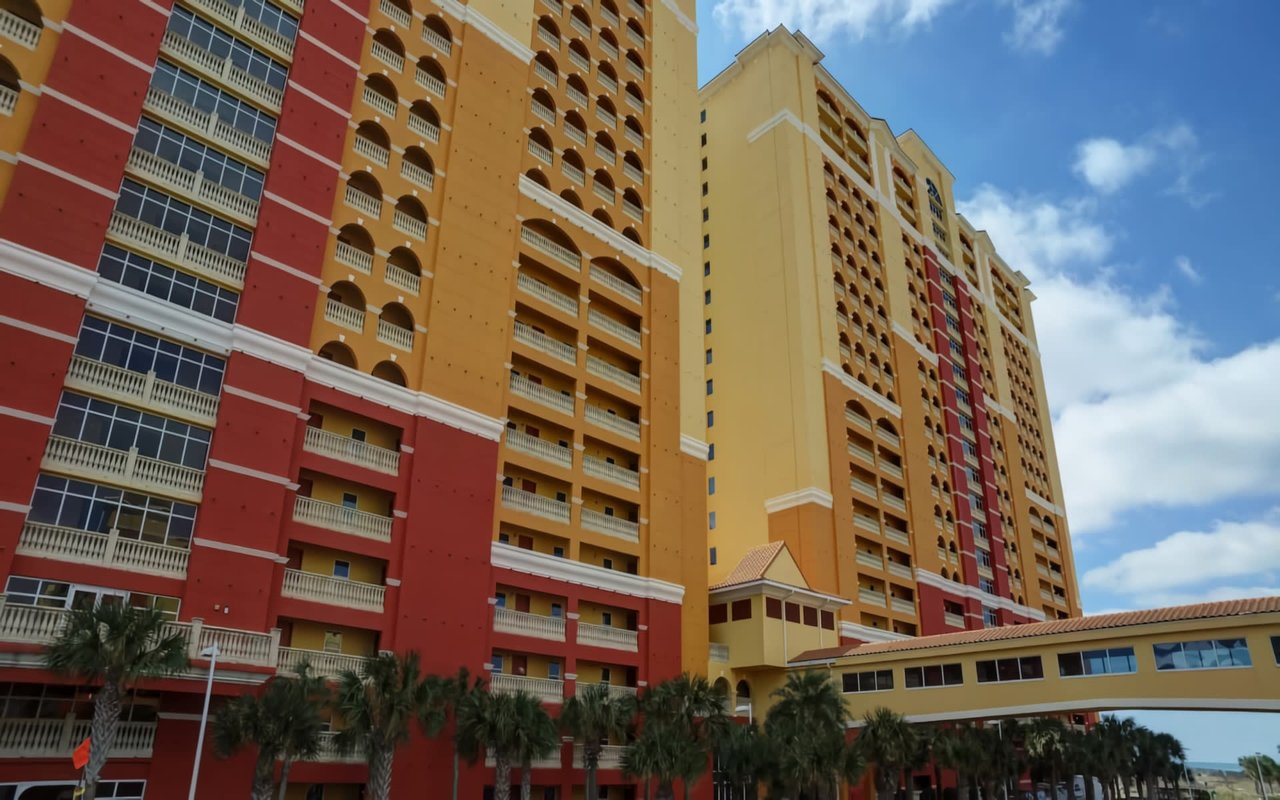
If you’ve looked at a few gulf-front condos here, you’ve probably noticed something. The HOA fees all look about the same from one building to the next.
Here’s what I want to show you. The fees look alike on paper. But what’s inside them is very different.
Almost every fee on this beach pays for the same basics. Cable and internet. Water and sewer. Trash pickup. Pest control. The building’s insurance. And money set aside for repairs, which is called reserves.
The differences are at the edges. Does the fee pay your electric bill? Is flood insurance in it? Does the building have a resort side that helps pay the bills? Is the building paying off a loan? How much is going into reserves? And how is the total split between big units and small ones?
For this piece, I pulled 13 buildings as an example. Every number comes from each association’s own budget. Here’s what’s the same, what’s different, and what it means when you’re comparing.
Watch a video about this here or read on:
What is an HOA fee, really?
Before the numbers, here’s the way I’d explain it to anyone who’s resistant to the whole idea of an HOA.
An HOA fee is just a bundle of bills. You own your unit, and you share the building with everybody else who owns one. All the things that keep that building running still have to get paid for. The insurance on the structure. The water. The trash. The elevators. The people who take care of the place. If you owned a house, you’d be paying every one of those bills yourself, in separate envelopes, and you’d never call it a fee. Here they get combined into one number and billed to you as your share.
That’s all it is. Which is exactly why the number by itself doesn’t tell you much — what matters is which bills are in the bundle, and how big they are.
What does an HOA fee cover in a Panama City Beach condo?
Across all 13 buildings, the middle of the fee is pretty much the same. Cable and internet. Water and sewer. Trash. Pest control. Upkeep of the pool, lobby and grounds. The building’s main insurance policy. And reserves.
So when a listing says the fee “includes cable and water,” that’s true almost everywhere. It doesn’t really tell you anything about the building.
Which condos include electricity in the HOA fee?
This one surprises people. At Seychelles, the fee pays your electric bill. Inside your unit. Their 2026 budget has $216,000 for electricity. That works out to about $91 per unit each month. The management company says it in writing. Owners there don’t get a power bill.
There are a couple of other buildings on the beach that do this too. I just haven’t gotten to them yet.
But at most buildings, the electricity in the budget is only for common areas. Hallways, pool pumps, lights in the parking garage. Sterling Breeze, for example, budgets $70,000 for 145 units. That’s not running anyone’s air conditioner.
One reason people get this wrong: the MLS (the listing system agents use) has one checkbox for “electricity.” It can’t tell you if that means your unit or just the hallway.
Which buildings carry flood insurance in the HOA fee?
For the other buildings, the budgets don’t show a separate flood line. I want to be careful here. That does not mean they have no flood coverage. It means you need to ask.
And again, the MLS has no field for this at all. No listing site can tell you.
Why are some Panama City Beach condo fees so low?
A lot of the time, it’s because the building has a business side. Four of these buildings run real resort operations. Registration fees. A front desk. Beach chair service. A bar. That money helps pay the building’s bills.
That’s how a gulf-front tower gets to a flat $925 a month.
Which buildings are paying off a loan?
Three of them.
None of that shows up in the fee number. If you compare Splash’s $2,200 a quarter to Sunrise’s $2,529 without knowing this, you’re comparing two numbers that aren’t telling the whole story.
How much of the HOA fee goes into reserves?
Reserves are money the building sets aside every year for big repairs down the road. Roofs, elevators, concrete, balconies. This is honestly the line I look at before I look at the fee.
Same beach. Same kind of building. And that line runs from about 8% to 38%. Two buildings can be $100 a month apart on the fee and putting away very different amounts each year.
What the reserve percentage doesn’t tell you
There’s a limit to the numbers above, and it’s worth saying out loud.
That percentage is what a building puts in each year. It doesn’t tell you what’s already sitting in the account. Those are two different questions.
Sterling Reef is the example. Their contribution is 14.3%, which looks thin next to Sunrise. But they’ve already got about $1.1 million banked. A building that underfunded for years can look fine on the percentage because it’s finally catching up. A building that has been funding hard for a decade can look average because it doesn’t need to push as hard anymore.
So ask for both. What goes in each year, and what the reserve balance is today. And if you already own, watch that balance from one year to the next. That’s the number that decides whether the next big repair is covered or turns into a special assessment.
How is the HOA fee split between unit sizes?
This surprises people too. There are six different ways of doing it on this one beach.
In every case, the developer picked the method before the first unit sold. And it decides who’s getting a deal.
That’s why the small units sit within about $900 a quarter of each other, but the 3-bedrooms run from Splash’s $2,200 a quarter all the way to Emerald’s $6,548 a quarter. If you’re buying a small unit, a flat-fee building works against you. If you’re buying a big one, it’s honestly one of the better values on the beach.
Why are HOA fees so high on this beach?
Every gulf-front budget I’ve read is built from the same six pieces. Once you know them, you can read your own notice.
- Insurance: Usually the biggest single line. It came down 19% to 29% at six of these buildings for 2026.
- Reserves: Florida now requires buildings to fund structural reserves, and boards can’t vote to skip it anymore. That’s why this line went up at some buildings even while insurance went down.
- Milestone repairs: The big concrete, balcony and structural projects. These often get paid for outside of reserves, and that’s where special assessments come from.
- Resort income: The business side that makes a flat fee possible.
- Debt: Loan payments sitting inside the budget.
- Labor and contracts: Security, grounds, the front desk, management.
When your 2027 budget notice shows up this fall, those six lines are pretty much the whole document.
What should I check before buying a Panama City Beach condo?
Two things, before you even compare fees.
First, what’s actually included. Electric, flood, gas, security.
Second, how much goes into reserves, as a share of the fee.
Then, once you’re under contract, ask for the board’s meeting minutes from the last twelve months. That’s the one routine document that will show you a repair project before it turns into a bill.
If you’re looking at a specific building and want to understand what’s really in its fee, get in touch. Walking people through this is a big part of what we do. I’m happy to pull what I have on the building you’re considering. And if you own and you’re thinking about selling, you can start with what your unit is worth today using my Home Valuation tool.
FAQ
Comparing a couple of buildings and want me to go through a specific budget with you? Call me: 850-290-0417.