In most cases I think it's a good idea to get a home inspection before you sell your house, but I'd rather not hand you a rule, because the honest answer depends on what you're willing to do with the information once you have it.
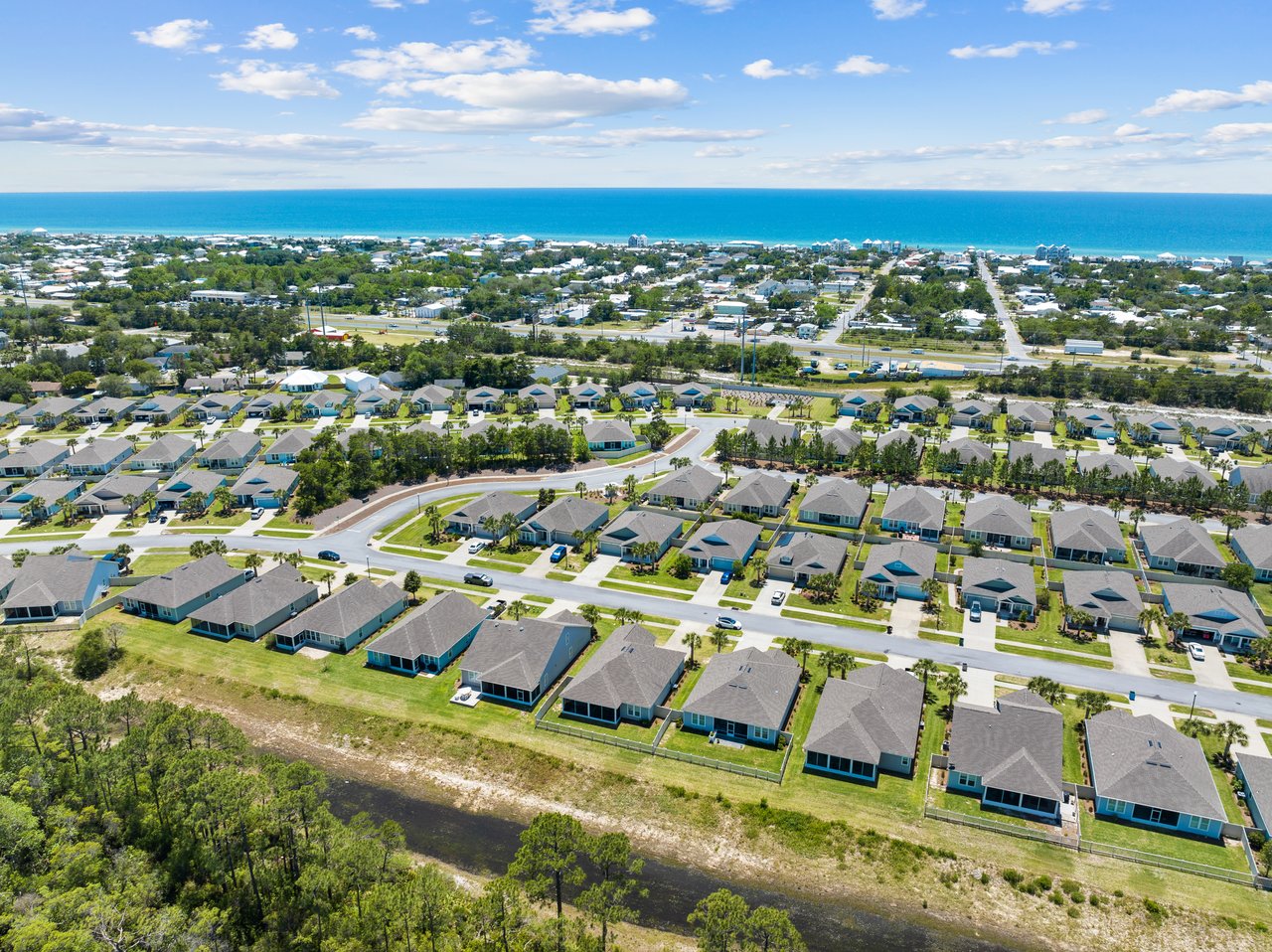
So instead, let me walk you through three examples. All three here in Panama City Beach, all three detached single-family homes, all three with sellers who were good, honest people trying to sell something. Three different inspections, and three very different endings.
I'm keeping them anonymous — to protect the innocent, as the old show used to say — but the findings are real, pulled from the actual reports.
First, what is a pre-listing inspection actually?
It's the same inspection the buyer would order. A licensed home inspector walks the property — roof, attic, air conditioning, electrical, plumbing, doors and windows — and writes you a report.
The only thing that changes is the order things happen in.
The way it's been done in real estate for decades is this: you list the house, you negotiate with a buyer, and the contract is contingent on a home inspection — meaning the buyer doesn't have to buy your house until they've had one. The buyer hires their inspector, that inspector is in your house for two or three hours, and then the buyer hits you with the information.
If you do it in advance, you call the inspector, you get the results, you decide what you're going to do about any repairs, and then you list — knowing more about your property than you did before.
Same list either way. You just get to see it a little more on your own terms, when you have time to deal with something, instead of dealing with it while you're already in a contract with a buyer.
One thing to keep in mind before we start: a home inspector is hired to come in and be an expert on an entire property that they're only inside for two to four hours. I have tremendous respect for what inspectors do. But the scope of their information is limited to that one visit, and they write down everything they see.
So a long report does not mean a bad house. Keep that in mind as you read these, because one of them runs thirty-six pages.
Case Study #1: They went first
Inspection ordered before the house was listed. Eleven items on an inspection report.
As soon as I walked in, the house was immaculate. You could tell right away these were people who take pride in how they live. Everything clean, everything well maintained. They'd already given me tons of information — age of the systems, how things had been maintained, what the utility bills ran, floor plans, you name it. Very thorough people.
They chose to have an inspection before the house ever went on the market, and eleven items came back. Nail heads on the roof, which you can't see from the ground. A freon leak in the air conditioning — freon is the refrigerant, the part that actually makes the air cold. A few other minor things.
Here's the part I'd want you to notice. That air conditioner had been serviced twice a year, every year, since the day it was installed. Same company the whole time. They had the records. And there was still a small leak in it that nobody knew about. A house can be well run and well documented and still accumulate things you simply cannot see.
What going first got them was this: they knew about all eleven items before a buyer's inspector ever walked through the door. They got to decide what to do about each one on their own schedule, and nothing on that list showed up with a closing date attached to it.
I've seen versions of this kind of seller preparation plenty of times, and it usually ends in a smooth closing process. Not because the house was perfect — you just read the list — but because nothing on that list ever got to be a surprise to anybody.
Case Study #2: "Craig, there is nothing wrong with this house"
Pre-listing inspection skipped. The buyer's inspector found it instead.
The second one was a retired couple, and their home was in immaculate condition too. Very, very clean, very well kept.
I brought up the idea of a pre-listing inspection, and I remember him looking at me and leaning in and saying, "Craig, there is nothing wrong with this house." It was almost like I'd injured his pride by suggesting it.
And honestly? I sort of agreed with him. I told him I understood, and I laid out the risks, but I couldn't really argue. He walked me through how he'd maintained the place, and everything looked great.
So they skipped it, which meant the buyer's inspector was the one who got up on the roof — and found defects in the shingles. Again, nothing you could really see from the street.
It turned out to be a problem in that whole area. The same builder had ordered a batch of shingles, and multiple roofs had come out of that same batch, and the batch was bad. Nothing about how these people maintained their home could have prevented it, and nothing about standing in the yard looking up would have revealed it.
Here's how it ended. They wanted to close by Thanksgiving, and they closed by Christmas.
The shingles were under warranty, which was the good news. The manufacturer was going to send a full replacement and pay to have the roof replaced. But the buyers didn't want to close until the roof was actually done.
For most sellers, that deal probably closes sometime in the new year. These sellers were extremely diligent — submitting every piece of paperwork the moment it was needed, staying on the vendors, push, push, push, push. They were lucky to get closed by Christmas.
And it still cost them a month. A month of time with family, moving during the holidays, changing moving plans, all of that. They did close. But that's what finding out late costs you even when everything works out.
Case Study #3: The one nobody had been in
Vacant after a tenant. Under contract. Thirty-six pages.
I've seen this situation more than once. It's a house you may or may not have lived in at some point, and then it became a rental. So you haven't really been in it lately — or you were in it after the tenant moved out, but you weren't in it the way you are when you're living there.
This particular one was vacant after a tenant. The owners cleaned it up, looked it over, figured it looked pretty good, listed it for sale and got a contract. They even lived in town, so they were around, sort of keeping an eye on things.
The inspector went out and the report came back...thirty-six pages. Ordinary, fixable things, mostly — but things you'd only know about if you were living there day to day:
- Ceiling stains in the bedrooms
- Water damage and staining in the sink cabinets in the bathrooms
- Showerhead leaking, shower corner leaking in the bath
- Hot and cold water reversed in the bathtub
- Garbage disposal in the kitchen wouldn't run
- Dishwasher leaking and kitchen sink drain underneath was also leaking
- Water heater had corroded pipes and signs of a past leak
- Garage door was bent in several places
- Fence latch was broken
Having the hot and cold reversed in a bathtub is something that happens all the time, and it's very simple to fix. But you don't know about it unless you're dealing with that water regularly.
And then the roof. Again, you couldn't see it from the street — standing on the ground with no official assessment, it looked like it was in good shape. The report found hail damage to the coverings and damage to the vents and the inspector wrote that the owner had better get a roofer out to fix it because it was a major issue.
The reason all of this came as a surprise was that nothing they knew about that house was current. The tenant hadn't said anything. The last time the owners were there, nothing had been mentioned. They remembered what they remembered from being in the house, and they filled out the paperwork based on that. They even found out later that other neighbors had already replaced their roofs, and they didn't know that either.
It wasn't that they were hiding anything. It was just old information about a property they were selling.
So how would you know about any of this if you hadn't been there living in the house? And frankly — once you're out and nobody's at the property, does some of it start happening because you're gone?
As for how this one ends, I'd give you a tidy answer except I've watched a report like that land several different ways. That's worth its own section, or blog.
What the three have in common
Case study one handled everything on their own schedule.
Case study two went under contract, had to fix the things that needed to be attended to, but lost a month.
Case study three had to deal with a 36-page inspector's report three days before closing and ended up in a negotiation.
Two of these three properties had roof problems the sellers didn't know about. Two well-maintained houses, two sets of honest people, and in both cases you couldn't see the problem from the ground.
And here's my takeaway. Nobody on that list had a property with nothing on the inspection. I'm not sure that house exists.
In 23 years, I can probably think of two inspections that came back with zero items that needed to be fixed. And one of those was a condominium.
What usually happens when the buyer finds it first?
I said I'd tell you how these end, so here's the honest read.
At the very least, you're in another negotiation. The buyers are asking you to fix something, or asking for money at closing. A lot of times those repair estimates get thrown together fast, everything's in a rush, and everything is very stressful.
I've seen sellers work it out. They think it through and realize they'll be in the same spot either way, so they go ahead and deal with it now, with this buyer, if the buyer stays interested. Sometimes the buyer is very interested and will work with the seller to come up with a solution.
I've also seen those transactions not close at all too. And then the seller is back to square one — except now they have all of this information, which they have to either disclose or fix, because they're going to be in the same situation with the next buyer.
And sometimes a buyer just gets scared by a thirty-six page official assessment, and there is no closing.
Would an inspection first have saved those roofs?
No. I want to be straight about that.
Neither one of these would have saved the roof. The shingles were defective either way and the hail damage was up there either way.
But especially on that third one, it would have changed when they found out about it, and what they could have done about it. And when you find out early, there are multiple solutions available to you. When you find out days before closing, there are a lot fewer options.
The one honest reason not to do this
This is an important caveat, and it's the reason I won't just tell everyone to go order an inspection.
I don't know that I'd recommend ordering one in advance if you're not committed to doing something about what you're going to find. As soon as you have the information, you're obligated to disclose what you know. I'm not an attorney, and if you have a question about your own property, that's a conversation for a Florida real estate attorney. But if you have the report and you aren't going to fix anything or do anything about it, you still have to disclose it properly. So if you're not prepared to figure out what needs dealing with and then deal with it, I don't know that it's a great advantage.
Now, there is a version of this that still works: you account for it in your price. You say, "Here's the information, here's what I know, you fix it," and you price the house accordingly. That's absolutely doable. What doesn't work is having the information, doing nothing, and hoping.
The buyer's inspector is still coming and more than likely, that list is going to get written either way. Very rarely a buyer won't inspect at all, and very rarely will a buyer accept a report that isn't clean — it just depends on how badly they want your particular property. But you should plan on an inspection happening.
You don't really get to decide whether anybody finds out. You only get to decide whether it's you who finds out first.
What I do at my own house
One more example, this one's mine.
My wife strongly encourages me to order inspections. We've been in the same house about fourteen years, and I think we've had two inspections in that time — not because we were selling, but we just like to check in and see whether there's anything we're missing that we could deal with now, before it becomes a worse problem.
It also means that when it is time to sell, we'll have records of all of it, and real information to hand a buyer.
I like the idea, honestly.
What I'd do before you list
Think about ordering the inspection in advance — and definitely get the roof looked at. That's the lesson from these three.
Decide what to fix, and how to fix it. Some things you just fix. Some you get a quote for and hand the quote to the buyer. Some you disclose and price for.
Keep the paperwork on everything you do. Case study two's warranty paperwork was worth a roof.
Talk it through with your agent — you should probably be doing that anyway.
What about selling a condo?
Same idea, smaller scale. The association generally handles the roof and the building. You own what's inside your unit — the air conditioning, the water heater, the wiring behind the walls — and that's where a condo inspection is worth every penny.
A few questions I get...
If you're thinking about selling and you have a question about any of this, generally speaking you'll be more in control of the situation if you get an inspection in advance. Just be prepared to deal with at least the major things if you're going to go down that road. And if not, be prepared for the buyer to do it and for you to find out later.
The conversation about this is a lot cheaper than finding out about it later.
Feel free to give me a call or shoot me a text at 850-290-0417 if you want to know more.
I'm a real estate broker, not an attorney. Nothing here is legal advice. For questions about disclosure obligations on your own property, talk to a Florida real estate attorney.